SAP MSC1N: Batch Creation and Storage Location Extension – Step-by-Step
Batch typically refers to a specific quantity of a material that has been produced or processed together. Batches are often used for quality control, traceability, and management purposes. "MSC1N" is associated with batch management, allowing users to create a new batch and define various attributes such as batch number, production date, expiration date, and more. This guide covers the Step-by-Step Process to create a batch using MSC1N, along with how to extend a storage location for a material. If you encounter any errors while following along, feel free to send a screenshot to pramod@learntosap.com, and I will help you resolve the issue.
✅ What is MSC1N in SAP?
1) Create Batch: Batch typically refers to a specific quantity of a material that has been produced or processed together. Batches are often used for quality control, traceability, and management purposes. "MSC1N" is associated with batch management, allowing users to create a new batch and define various attributes such as batch number, production date, expiration date, and more. This involves entering relevant information about the batch, such as its characteristics and details related to production, quality, and expiration. This batch can then be associated with specific materials and used for tracking and management purposes throughout its lifecycle.
It helps to understand why batches exist at all: SAP tracks most materials at the aggregate stock level, but many industries - pharmaceuticals, food and beverage, chemicals, and electronics among them - need to know exactly which production run or delivery a particular unit of stock came from. A batch gives that specific quantity its own identity within the system, so if a quality issue, a recall, or an expiration concern ever arises, it can be traced back to precisely the right batch rather than the material as a whole.
Real-Time Example: Batch Creation for Finished Goods - MSC1N
TCODE - MSC1N.
| Transaction | Purpose |
|---|---|
| MSC1N | Create Batch. |
| MSC2N | Modify Batch. |
| MSC3N | Display Batch. |
📋 How Batch Management Fits Into Inventory and Quality Processes
Batch Creation: A batch is created in MSC1N for a specific material, plant, and storage location, giving that quantity of stock its own trackable identity.
Batch-Specific Attributes: Characteristics such as production date, expiration date, or quality status can be maintained against the batch, depending on how batch management is configured for the material.
Stock Movements Against the Batch: Goods receipts, transfers, and issues can all be posted against a specific batch, keeping quantity and location records tied to that particular production run or delivery.
Quality Inspection: In organizations using Quality Management, a batch can be placed in quality inspection stock and only released for use once it passes inspection, with the result recorded against the batch itself.
Traceability and Recall Support: If an issue is later identified with a specific batch, all stock movements and usages tied to that batch number can be traced, supporting recalls or corrective action limited to the affected batch rather than the entire material.
🔧 Follow Steps: Create Batch Using MSC1N
Go To: Run transaction MSC1N directly.
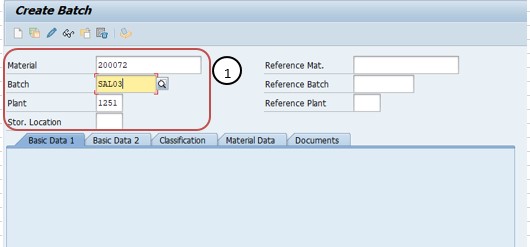
Go to Tcode MSC1N. Run transaction MSC1N to open the Create Batch screen.
Select Material No - 200072. Enter the material number the batch is being created for.
Select Batch No - SAL03. Assign the batch number that will identify this specific quantity of the material going forward.
Select Plant - 1251. Enter the plant where this batch of stock is held.
Select Storage Location - ER01. Enter the specific storage location within the plant where this batch will be stocked.
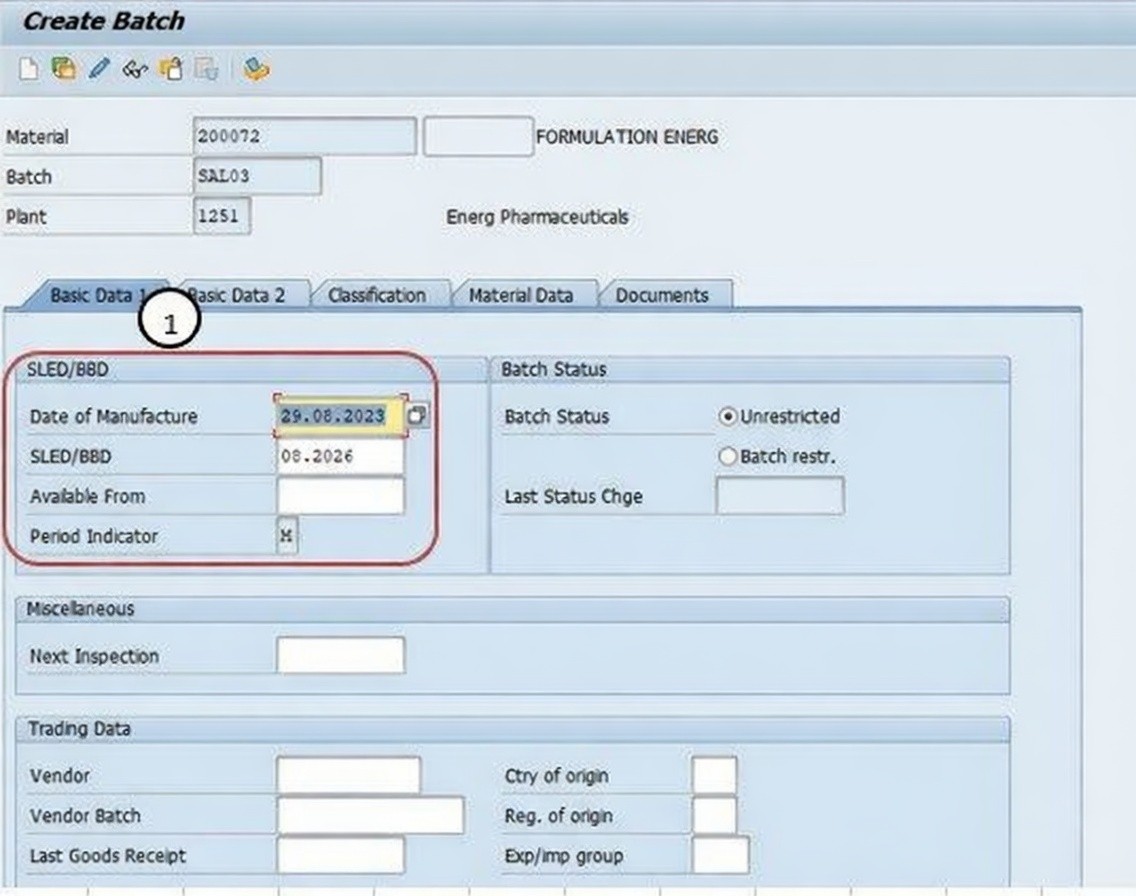
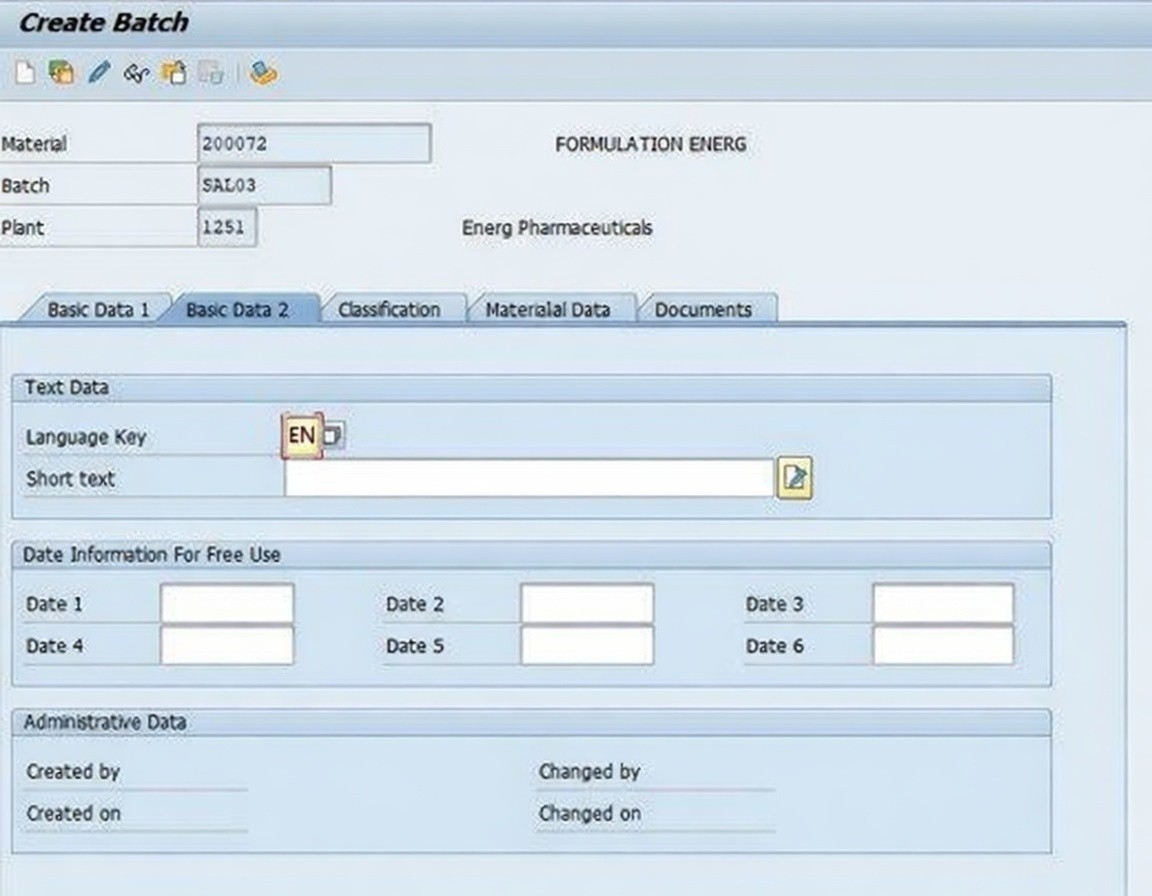
Then Save Batch. Once material, batch number, plant, and storage location have been entered correctly, save the batch. It is now available for stock postings, quality inspection, and traceability tied specifically to this batch identity.
✅ 2) Create Storage Location (Extend Storage Location)
"Create storage location" refers to a command or transaction used to create a new storage location, or more precisely in this context, to extend an existing material to a new storage location. A storage location in SAP is a physical or logical location where goods or materials are stored within a company's organizational structure. It plays a crucial role in managing inventory and stock movement.
Extending a material to a storage location is what allows that specific material to be stocked, received, transferred, and issued at that particular location within the plant. Without this extension, SAP has no storage-location-level master data for the material at that location, which blocks stock postings there even if the material already exists elsewhere in the plant.
Enter Material No - 200072. Enter the material number that needs to be extended to the new storage location.
Enter Plant - 1251. Enter the plant that the storage location belongs to, since storage locations are maintained within a specific plant's organizational structure.
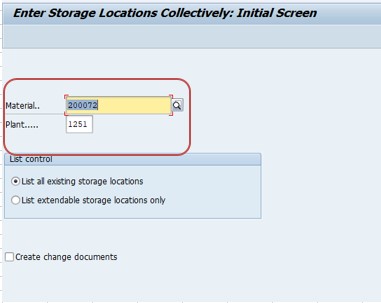
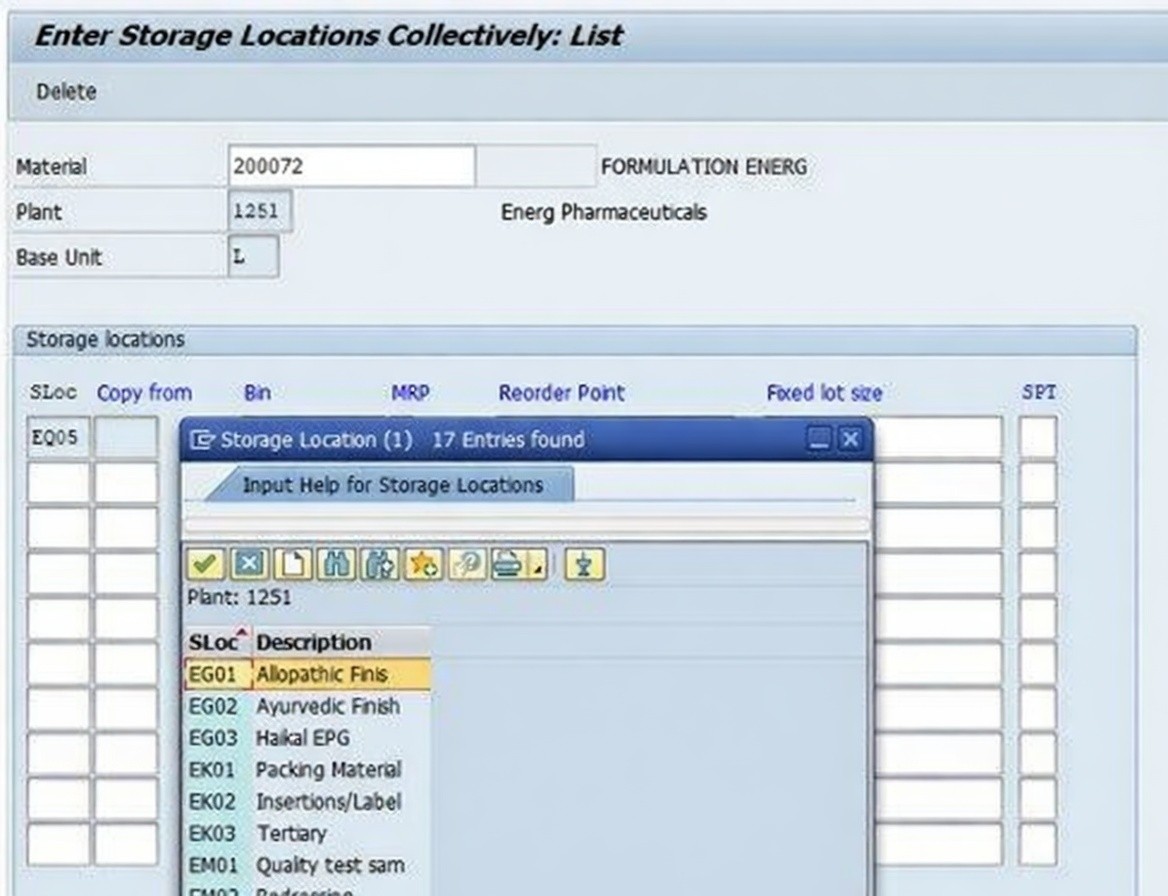
Then Save Storage Location. Once material number and plant have been confirmed, save the storage location extension. The material is now recognized at that storage location for stock postings, transfers, and inventory tracking.
📋 Key Fields Involved in Batch and Storage Location Setup
| Field | What It Captures |
|---|---|
| Material Number | The material the batch or storage location extension applies to. |
| Batch Number | The unique identifier assigned to a specific quantity of the material, used for traceability throughout its lifecycle. |
| Plant | The manufacturing or storage facility where the batch or storage location applies. |
| Storage Location | The specific physical or logical location within the plant where the material or batch is stocked. |
| Batch Characteristics | Attributes such as production date, expiration date, or quality status that can be recorded against a batch. |
📋 Related SAP Transactions
| Transaction | Purpose |
|---|---|
| MSC1N | Create a new batch for a material at a specific plant and storage location. |
| MSC2N | Modify an existing batch, such as updating batch characteristics. |
| MSC3N | Display a batch without allowing changes. |
| MM01 / MM02 | Create or extend a material master, including the storage location view. |
| MIGO | Post goods movements against a specific batch and storage location. |
| QA32 | Process quality inspection lots, often tied to a specific batch. |
| MB52 | Display stock overview, including batch-level and storage-location-level quantities. |
❗ Common Mistakes in Batch and Storage Location Setup
- Assigning a batch number that duplicates or closely resembles an existing batch, creating confusion about which specific production run a batch number actually refers to.
- Creating a batch at the wrong plant or storage location, mismatching where the physical stock is actually held.
- Forgetting to extend a material to a storage location before attempting to post stock there, resulting in a blocked goods movement.
- Leaving batch characteristics such as expiration date unmaintained when they are actually relevant for the material, weakening traceability and expiration monitoring.
- Not coordinating batch numbering conventions across departments, making it harder to interpret batch numbers consistently across production, quality, and warehouse teams.
- Extending a storage location without confirming the physical space or bin structure is actually ready to receive the material.
✅ Best Practices for Batch and Storage Location Management
- Establish a consistent, organization-wide batch numbering convention so batch numbers are interpretable across production, quality, and warehouse teams.
- Maintain relevant batch characteristics - production date, expiration date, quality status - consistently for any material where traceability or shelf life genuinely matters.
- Confirm a material has been extended to a storage location before scheduling any stock movement there, to avoid last-minute posting blocks.
- Coordinate storage location extension with the physical warehouse team, so system master data and actual bin readiness are aligned.
- Use MSC3N periodically to review batch data for accuracy, particularly for materials with expiration dates or strict quality requirements.
- Document why a specific batch was created - linking it to a production order or goods receipt reference - so its origin is easy to trace later.
📈 How Batch and Storage Location Data Powers Downstream Traceability
The batch number created through MSC1N becomes the thread that ties every subsequent stock movement, quality inspection result, and consumption record back to a specific quantity of material. Goods receipts, transfers, production consumption, and even sales deliveries can all reference the batch, meaning that months later, if a quality concern surfaces, the batch number is what allows an organization to identify exactly which downstream usages or customers might be affected - rather than treating the entire material as potentially compromised.
Storage location extension plays a quieter but equally important role: it is the master data prerequisite that allows a material to physically exist at a given location within the system's records at all. A missing storage location extension doesn't just block one transaction - it can hold up an entire receiving or put-away process until someone realizes the material was never extended to that location in the first place.
✅ Validating Batch and Storage Location Setup
Before relying on a newly created batch or storage location extension, it's worth running through a short validation checklist. Display the batch (MSC3N) and confirm the material, plant, and storage location are all correct, and that any relevant characteristics like expiration date have been maintained. For storage location extension, confirm the material master now shows the storage location view for the intended plant and location, and that the physical warehouse space is genuinely ready to receive the material. Finally, confirm batch numbering follows your organization's established convention, so it remains interpretable alongside every other batch already in the system.
Skipping this validation is one of the more common reasons a goods receipt or transfer gets blocked unexpectedly - usually because a storage location extension was never completed, or a batch characteristic that quality or planning depends on was left unmaintained.
🎓 Interview-Style Questions and Answers
Q: What is a batch in SAP, and why does batch management matter?
A batch is a specific quantity of a material produced or processed together, given its own identity in SAP for tracking purposes. Batch management matters because it enables traceability, quality control, and expiration monitoring at a much finer level of detail than tracking a material's stock in aggregate.
Q: What is the difference between MSC1N, MSC2N, and MSC3N?
MSC1N creates a new batch, MSC2N modifies an existing batch, and MSC3N displays a batch without allowing changes.
Q: What does it mean to extend a material to a storage location?
Extending a material to a storage location means creating the storage-location-level master data for that material at a specific plant and location, which is required before any stock postings, transfers, or inventory tracking can occur there.
Q: How does batch management support a product recall?
Because every stock movement and usage can be tied back to a specific batch number, a quality issue identified in one batch can be traced to exactly which quantities, locations, or customers received material from that batch, allowing a recall to be scoped precisely rather than affecting the entire material.
📚 Quick Glossary of Terms Used in This Guide
- Batch: A specific quantity of a material produced or processed together, tracked individually in SAP for traceability and quality purposes.
- Batch Number: The unique identifier assigned to a batch, used to reference it throughout its lifecycle.
- Storage Location: A physical or logical location within a plant where materials are stored and tracked.
- Storage Location Extension: The process of creating storage-location-level master data for a material so it can be stocked and moved at that location.
- Batch Characteristics: Attributes such as production date, expiration date, or quality status recorded against a specific batch.
- Traceability: The ability to track a material's history, usage, and movement back to its originating batch or production run.
📝 Governance for Batch and Storage Location Master Data
Because batch numbers and storage location extensions underpin traceability and inventory accuracy, most organizations - particularly those in regulated industries such as pharmaceuticals or food and beverage - maintain governance around who can create batches, what naming convention batch numbers must follow, and what characteristics are mandatory for different material types. Similarly, storage location extension is often governed by warehouse operations, ensuring that a material is only extended to a location once physical space, bin setup, and any required handling procedures are actually in place.
Data quality governance for batch and storage location master data follows the same underlying logic as elsewhere in SAP: a batch created carelessly, or a storage location extended without physical readiness, tends to surface as a blocked transaction, a traceability gap, or a compliance finding well after the initial setup, at which point it is considerably more disruptive to correct. A clear, consistently applied setup checklist keeps this master data reliable as production volume and location complexity grow.
In regulated environments, batch governance often extends beyond SAP itself into formal standard operating procedures - who is authorized to assign batch numbers, how batch records are archived for audit purposes, and what retention period applies to batch history once a material has been fully consumed or sold. Storage location governance, meanwhile, frequently intersects with warehouse safety and compliance requirements, particularly for materials needing specific handling conditions such as temperature control or segregation from other product categories. Treating both batch creation and storage location extension as governed master data processes, rather than incidental data entry steps, is what keeps a growing operation's traceability and inventory accuracy intact even as the number of materials, plants, and storage locations expands over time.
💼 Real-World Scenario: Creating a Batch for a New Production Run
Production supervisor Rohan Patil at Learn Pharmaceuticals had just completed a production run for material 200072, a finished product requiring strict batch-level traceability under industry regulations. Before the finished goods could move into inventory, Rohan needed to create a batch identity for this specific production run.
He opened transaction MSC1N, entered material number 200072, and assigned batch number SAL03 to uniquely identify this run. He entered plant 1251 and storage location ER01, confirming these matched exactly where the physical stock would be held after production. Because the storage location had already been extended for this material during initial setup, the batch save completed without issue, and batch SAL03 was now ready to receive the finished goods quantity from this specific run.
A few weeks later, when a downstream quality concern was raised about a narrow date range of production, quality manager Priya Patil was able to search specifically for batch SAL03, review every stock movement and consumption tied to it, and confirm the concern was isolated to this batch alone - sparing the organization from having to treat the entire material's inventory as suspect, purely because the batch had been created accurately and consistently from the start.
📱 This Configuration in SAP S/4HANA
Transaction MSC1N and the underlying batch management data model work largely the same way in SAP S/4HANA as in classic ECC, since batch-level tracking remains a core Materials Management and Quality Management capability. What has changed in S/4HANA is the availability of Fiori apps for batch management, including improved batch information cockpit views that let users search and analyze batch data across materials and plants more visually, alongside tighter integration with Quality Management inspection results. Many S/4HANA implementations continue to use MSC1N, MSC2N, and MSC3N for direct batch maintenance, while Fiori-based batch information tools are increasingly favored for cross-material traceability analysis.
🎯 Conclusion
Creating a batch in MSC1N, and extending a material to the right storage location before it, are the small but essential steps that make real traceability possible in SAP - the difference between being able to isolate a quality issue to a single production run and having to treat an entire material's inventory as suspect. Getting the material number, batch number, plant, and storage location right at creation, and completing storage location extension ahead of any stock movement, are what separate a smooth receiving and production process from one riddled with blocked transactions and traceability gaps. Keep this guide handy the next time your organization needs to create a batch or extend a material to a new storage location in SAP.